Seasonal hosting / 3 min read
A Friendsgiving potluck with fewer moving parts
Give each guest one clear contribution and keep the host responsible for the room, serving plan and gaps in the menu. A simple shared list works better than asking everyone to bring whatever they like and discovering five desserts at the door.
Set the menu shape before assigning dishes
Begin with confirmed guests and dietary needs. Decide which main dish, sides, drinks and desserts you actually want, then invite people to choose from those roles. Make it easy for someone to bring a ready-made item or help with setup instead of cooking.
Use a single list that records the dish, person, number of portions, ingredients, arrival time and any equipment needed. Do not rely on a string of separate messages when several people are coordinating.
Ask about serving needs as well as the food
A dish may arrive with no spoon, need oven space or require refrigeration. Ask those questions when it is assigned. Count oven shelves and refrigerator space before promising every guest you can finish their food at your house.
For food safety, use the linked public-health guidance and the instructions appropriate to each dish. A decorative table layout is not a substitute for managing temperatures. Keep ingredient information available and separate serving utensils with their dishes.
Use a contribution sheet
| What to record | Why it helps |
|---|---|
| Dish and person | One owner for each contribution |
| Portions | Avoids every guest cooking for the full group |
| Ingredients and dietary notes | Lets guests make informed choices |
| Hot, cold or ready to serve | Reveals space and equipment conflicts |
| Dish and serving utensil | Prevents a last-minute hunt for spoons |
| Arrival time | Keeps the entrance and kitchen manageable |
Create one clear route through the room
Keep coats and bags away from the food table. Put plates at the start of the buffet, dishes next, and cutlery and napkins at the end so guests have fewer objects to juggle. Give drinks a separate spot if the room allows it.
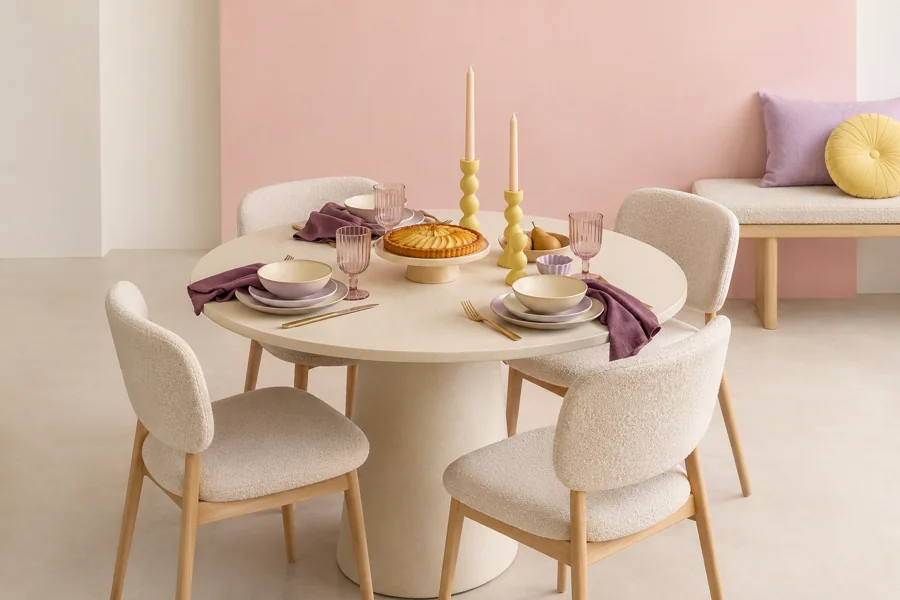
Use one low floral arrangement or repeated napkin color to make the table feel intentional. Food already brings a lot of shape and color; it does not need a crowded display around it.
Decide what happens to leftovers
Check what you already have before buying more containers. Plan how leftovers will be portioned and stored, and follow official guidance on cooling and storage. Avoid leaving food out for the sake of keeping the buffet looking full.
The EPA recommends planning purchases around what you expect to use and organizing food to reduce waste. Apply that idea here by agreeing portions before guests shop and keeping the final menu visible to everyone.
Your questions, answered.
Does the host need to cook the main dish?
No. Assign it to whoever wants that role and has the equipment. The host should still know when it will arrive and how it will be served.
What should a guest who cannot cook bring?
A requested drink, a ready-made item, containers or help with setup can be a useful contribution. Ask for one specific thing.
How do we avoid too much food?
Assign portions alongside dishes, and do not ask every contributor to feed the entire party with a full meal. Keep a single menu list and adjust it when guest numbers change.
Sources & editorial notes
Planning suggestions and example timelines are Event Fairy editorial guidance. Sources below support the specific background points; they do not validate every suggested activity or budget.
- US EPA: Preventing Wasted Food At Home
Primary practical guidance: inventory existing food, plan purchases with quantities, buy what will be used. It does not supply or endorse the example event budgets and schedules.
- USDA: Leftovers and Food Safety
Official food-handling guidance; consult for cooling, storage and reheating rather than relying on styling advice.
One small next step.
Choose one decision from this guide and add it to your plan. You do not need to do everything today.
Open the planning desk